北京出租官方网站:http://www.beijingtaxithefilm.com
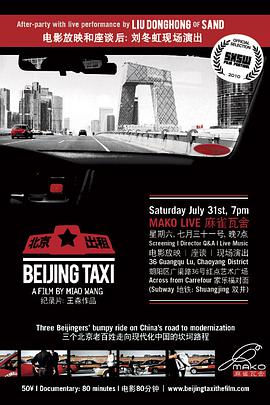
《北京出租车》是导演王淼的第一部长片纪录电影。王淼毕业于美国芝加哥大学本科经济学位,后定居纽约,曾从事摄影、设计等工作,出于对电影的热爱,她考取了美国Parsons艺术学院电影及设计研究生学位,2007年,拍摄了自己的第一部纪录短片《Yellow Ox Mountain》,这部纪录片在全世界20多个电影节上播放过,并曾在Dallas的亚洲电影节上获得了最佳短篇纪录片奖。王淼还曾为《国家地理杂志》频道剪辑节目,为建筑设计师Steven Holl做过两个纪录片。她还在Maysles中当助手。(MAYSLES因为聚集了大批的有名纪录片导演而出名,被称为“纪录片导演的传奇殿堂”)
影片讲述三个出租车司机在奥运会前的北京两年间的点滴生活片段,以他们的视角去反映出北京为了举办奥运会所发生的一些方方面面的变化。在奥运会期间,出租车司机是北京的窗口,他们离中国的心脏最近,他们一天14个小时都在听广播和谈话节目,这些出租车司机可以谈天说地,无所不知、无所不晓;通过出租车司机这一个社会小层面,真实反映了北京很多独特而与众不同的气息;从某种角度来讲,出租车司机们是一个城市最好的见证。
《北京出租车》曾入选去年的圣丹斯电影节,并获邀在今年3月份于美国德克萨斯州举办的SXSW艺术节进行展映。
转载自“时光网”
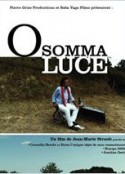
转自:http://www.filmlinc.com/nyff/2010/views-from-the-avant-garde-friday-october-1/views-from-the-avant-garde-jean-marie-straub
“The end of paradise on earth.”—Jean-Marie Straub
The 33rd verse and last chant of “paradise” in Dante’s Divine Comedy. The film starts with verse 67, “O somma luce…” and continues to the end. “O Somma luce” recalls the first words uttered by Empedocles in Danièle Huillet and Jean-Marie Straub’s 1987 The Death of Empedocles—“O himmlisch Licht!…” (O heavenly light!). This extract from Hölderlin’s text is also inserted into their 1989 film Cézanne.
“O somma luce” invokes utopia, or better still “u-topos,” Dante, Holderlin, Cézanne… the camera movement, recalling Sisyphus, in the film’s long shots, suggests its difficulty.
In O somma luce, with Giorgio Passerone’s Dante and the verse that concluded the Divine Comedy, we find at the extremity of its possibilities, the almost happy speech of a man who has just left earthly paradise, who tries to fully realize the potential of his nature. Between the two we find the story of the world. The first Jean-Marie Straub film shot in HD.
So singular are the textual working methods of Straub-Huillet, and now Straub on his own, that it is hard to grasp how far reaching they are. Direction is a matter of words and speech, not emotions and action. Nothing happens at the edges, everything is at the core and shines from there alone.
During the rehearsals we sense a slow process by which ingredients (a text, actors, an intuition) progress towards cohesiveness. It is, forgive the comparison, like the kneading of dough. It is the assembling and working of something until it becomes something else… and, in this case, starts to shine. Actually it’s very simple, it’s just a question of opening up to the light material that has been sealed up. Here, the process of kneading is to bring to life and then reveal. The material that is worked on is speech. So it is speech that becomes visible—nothing else. “Logos” comes to the cinema.
The mise en scène of what words exactly?
The process of revealing, “phainestai” “phainomenon,” the phenomenon, is what take splace, what becomes visible to the eye.
Is “Straubie” Greece?
This mise en scène of speech, which goes beyond a close reading of the chosen text, is truly comes from a distant source.—Barbara Ulrich